

Not every gardening tip you read online actually survives contact with real soil. Robert MyGardenPatio learned that the hard way — years of trial, dead plants, and patios that looked great in April and sad in August. So when he came across a series of practical, no-fluff gardening guides on homesblogs, he paid attention.
What stood out wasn’t the usual advice. It was the specificity. The kind of detail that separates someone who gardens from someone who grows things successfully. Robert MyGardenPatio tested each tip himself — in raised beds, container setups, and a mid-sized backyard patio — before passing them along.
This article covers the 8 most useful ideas he took away. Some are about soil. Some are about timing. One is about a mistake almost every beginner makes with watering. All of them are practical, proven, and worth trying whether you have a sprawling garden or a single balcony planter.
If you want your outdoor space to actually thrive — not just survive — read on.
1. Fix Your Soil Before You Plant Anything
Most plants fail not because of bad seeds or poor sunlight. They fail because the soil is wrong.
Robert MyGardenPatio now starts every new season the same way: testing his soil’s pH before a single seed goes in. Garden centers sell basic test kits for a few dollars. Vegetables generally prefer a pH between 6.0 and 7.0. Anything outside that range and your plants will struggle to absorb nutrients — no matter how much fertilizer you add.
The fix is simple: work compost into your beds each spring. It improves drainage in clay-heavy soils and adds water retention to sandy ones. One generous layer, turned into the top 10–12 inches, makes a measurable difference.
| Soil Type | Common Problem | Fix |
| Clay-heavy | Poor drainage, compaction | Add compost + perlite |
| Sandy | Dries out fast, low nutrients | Add compost + mulch |
| Loam | Generally good | Maintain with annual compost |
| Acidic (pH < 6) | Nutrient lockout | Add garden lime |
| Alkaline (pH > 7.5) | Iron/manganese deficiency | Add sulfur or acidic compost |
2. Water at the Root, Not the Leaf
Watering the foliage is one of the most common beginner mistakes — and one of the easiest to fix. Wet leaves invite fungal disease. Water sitting on leaves in direct sun can also scorch them.
The rule Robert follows: water at the base of the plant, slowly, early in the morning. This gives moisture time to reach the roots before the heat of the day accelerates evaporation. Drip irrigation or a simple soaker hose works better than an overhead sprinkler for most garden beds.
For container plants on a patio, water until it drains from the bottom. If it drains immediately, your potting mix may be too dry and compacted — water slowly twice, ten minutes apart, to let the soil rehydrate properly.
3. Companion Planting Isn’t Optional
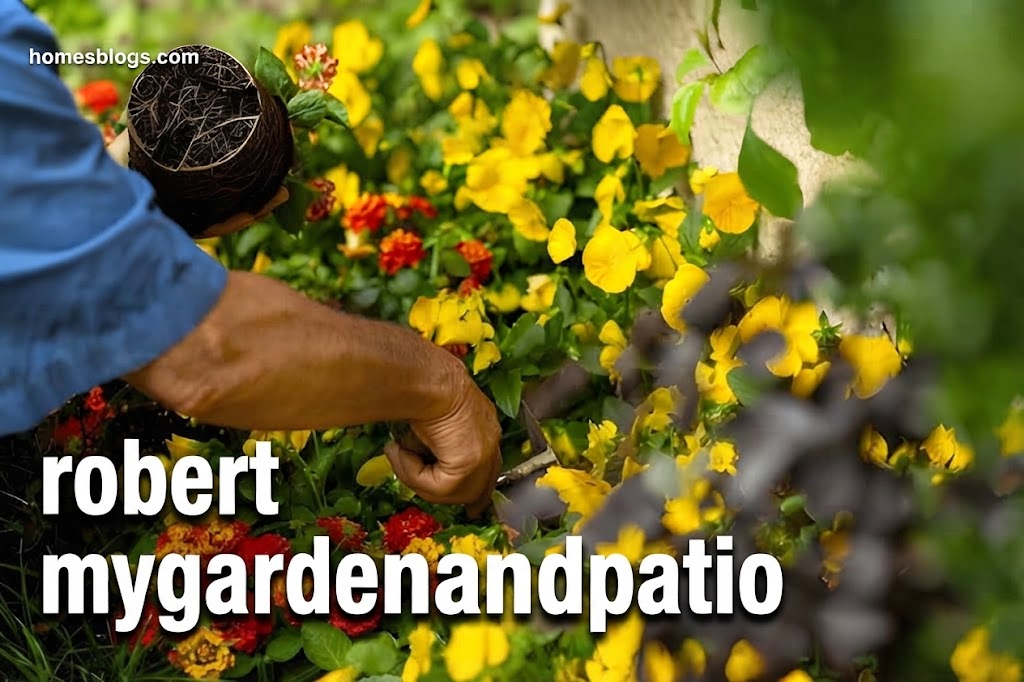
Growing the right plants next to each other isn’t just folklore — it has practical benefits. Some pairings deter pests naturally. Others improve soil nitrogen. A few just share space efficiently.
Three pairings that consistently work:
- Tomatoes + Basil — basil is widely reported to repel thrips and aphids while improving the growing environment nearby
- Beans + Corn + Squash — the classic “Three Sisters” combination; beans fix nitrogen, corn provides a climbing structure, squash shades the soil
- Marigolds + Most Vegetables — marigolds deter nematodes and many common garden pests when planted as a border
What to avoid: fennel is famously hostile to most plants and should be kept in its own container or far from vegetable beds.
4. Mulch Is Doing More Work Than You Think
A 2–3 inch layer of mulch around your plants does several things at once: it slows water evaporation, suppresses weeds, moderates soil temperature, and breaks down over time to feed the soil.
Robert MyGardenPatio keeps mulch away from direct contact with plant stems — a gap of 2–3 inches prevents rot and stops pests from sheltering right at the base. Wood chip mulch, straw, or shredded leaves all work well depending on what’s available locally.
| Mulch Type | Best For | Notes |
| Wood chips | Trees, shrubs, pathways | Breaks down slowly |
| Straw | Vegetable beds | Lightweight, easy to apply |
| Shredded leaves | All beds | Free if you have trees |
| Gravel/stone | Succulents, patio pots | No nutrient benefit |
| Compost | All beds | Adds nutrients as it mulches |
5. Deadhead Regularly to Keep Flowers Producing
Flowers that are allowed to go to seed will stop producing new blooms. The plant’s energy shifts from flowering to seed development — which is the opposite of what most gardeners want through the season.
Deadheading (removing spent flowers) keeps the plant in production mode. For most annuals and perennials, a quick pinch or snip just below the spent bloom is enough. Do it every few days during peak season and you’ll get noticeably more color through summer and into fall.
6. Container Plants Need More Feeding Than Ground Plants
Potting soil loses nutrients faster than garden beds. Every time you water a container, nutrients leach out through the drainage holes. Plants in pots are also entirely dependent on what you provide — they can’t extend their roots to find more.
A liquid balanced fertilizer applied every two weeks during the growing season addresses this directly. Slow-release granular fertilizers mixed into potting soil at planting time help too, but they’re not a season-long solution on their own.
This is one of the most consistent differences Robert MyGardenPatio has seen between thriving container gardens and struggling ones. The plants look the same in spring. By July, the fed ones are a different story.
7. Understand Your Hardiness Zone Before You Buy
Buying plants that aren’t suited to your climate is an expensive way to learn a lesson. Every plant has a hardiness zone — a range of winter temperatures it can survive. Planting outside your zone means annual replacements at best, and disappointment at worst.
The USDA Plant Hardiness Zone Map (freely available online) gives you your zone based on average annual minimum temperatures. Most plant tags reference these zones. If a plant is rated for Zone 8 and you’re in Zone 5, it won’t survive winter outdoors.
Quick zone reference:
| Zone | Average Minimum Temp | Example Regions |
| 3 | -40°F to -30°F (-40°C to -34°C) | Northern Canada, Alaska interior |
| 5 | -20°F to -10°F (-29°C to -23°C) | US Midwest, parts of Central Europe |
| 7 | 0°F to 10°F (-18°C to -12°C) | US Mid-Atlantic, parts of UK |
| 9 | 20°F to 30°F (-7°C to -1°C) | Pacific Coast US, Mediterranean Europe |
| 11 | Above 40°F (Above 4°C) | Tropical regions, Southern Florida |
8. Keep a Garden Journal — Even a Simple One
This one sounds low-tech because it is. But it’s also the tip that has the longest compounding effect.
A basic record of what you planted, where, when, what worked, and what failed turns one season of experience into something you can actually use next year. It doesn’t need to be elaborate — a notebook, a phone note, even a few photos with dates covers it.
Over time, patterns emerge. You’ll notice which corner of your bed dries out first. Which month your aphid problem shows up. Which variety of tomato outperforms the others in your specific conditions. That information is genuinely yours — no gardening blog can replicate it for your garden.
Robert MyGardenPatio started doing this in his third year of gardening. It’s the one habit he says he wishes he’d started on day one.
Summary: What These 8 Tips Have in Common
They’re all about working with your garden’s actual conditions rather than against them. Soil, water, companions, nutrients, climate — these aren’t abstractions. They’re the variables that determine whether your outdoor space thrives.
| Tip | Core Principle | Effort Level |
| Fix your soil first | Foundation before everything | Low-Medium |
| Water at the root | Efficiency + disease prevention | Low |
| Companion planting | Natural pest and nutrient management | Low |
| Mulch consistently | Moisture and weed control | Low |
| Deadhead regularly | Extend bloom season | Low |
| Feed container plants | Compensate for nutrient loss | Low |
| Know your zone | Buy plants that will actually survive | Low |
| Keep a journal | Compound your experience over time | Low |
The common thread: none of these require expensive tools or specialized knowledge. They require consistency and a little attention. That’s the approach Robert MyGardenPatio has built his garden around — and it’s the one these tips are built on too.