

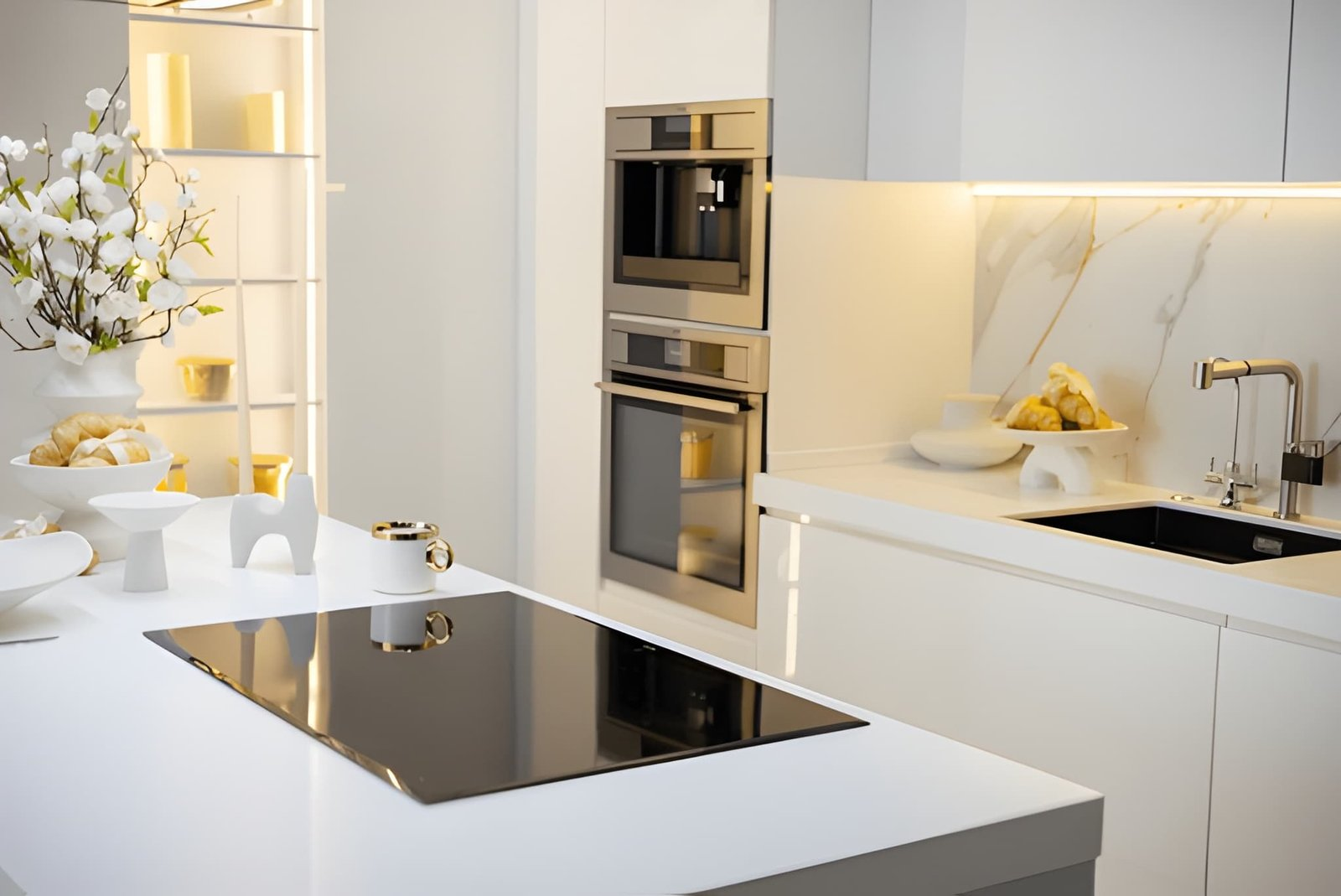
Kitchen renovations are expensive. In Canada, a mid-range kitchen remodel runs anywhere from $25,000 to $60,000 depending on the province, scope, and materials. That’s not the kind of money most people want to spend twice.
The problem is that kitchen design trends move fast. What looked fresh and modern in 2015 — grey cabinets, subway tile, open shelving everywhere — already feels dated to a lot of buyers and homeowners. Not because those choices were wrong, but because they were trend-driven rather than timeless.
A timeless kitchen isn’t boring. It isn’t the absence of personality. It’s a set of deliberate design decisions that hold up across decades because they’re rooted in proportion, material quality, and functional logic rather than whatever was trending on design blogs that year.
This article covers the specific choices — cabinet style, hardware, countertops, colour, layout, and lighting — that define a timeless kitchen, with honest guidance on what Canadian homeowners should invest in, what to avoid, and where trends are safe to follow without long-term regret.
Why Kitchens Date Faster Than Any Other Room
Kitchens are expensive to change and heavily photographed at point of sale. That combination makes dating choices particularly costly — both financially and in resale value.
Trends enter kitchens faster than most rooms because of the renovation industry’s marketing cycle. Cabinet manufacturers, tile companies, and appliance brands all benefit from homeowners replacing perfectly functional kitchens. The result: trends are heavily promoted, widely adopted, and then quietly abandoned — leaving homeowners with a kitchen that screams a specific year.
| Design Era | What Was Trending | How It Ages |
|---|---|---|
| Early 2000s | Honey oak cabinets, ceramic tile floors | Very dated — oak is returning but differently |
| 2010–2015 | Espresso cabinets, granite countertops | Feels heavy and dark to current buyers |
| 2015–2020 | Grey cabinets, white subway tile, open shelving | Already feeling overexposed |
| 2020–2024 | Two-tone cabinets, fluted details, arched elements | Too early to call — some will last, some won’t |
| Timeless | Shaker cabinets, white/cream, stone counters, brass or matte black hardware | Consistent across 30+ years of design history |
What a Timeless Kitchen Actually Looks Like
Cabinet Style: Shaker Is the Default for a Reason
Shaker-style cabinets have been in continuous production since the 19th century. They work because the design is rooted in proportion and craft rather than decoration — a recessed panel framed by flat rails and stiles. Nothing to date. Nothing to trend out.
The alternative that also holds up: flat-front slab cabinets in a quality finish. These read as clean and modern without the ornamentation that makes some styles age poorly. What doesn’t hold up: ornate raised-panel doors, heavy rope detailing, or anything that requires a specific era’s aesthetic to make sense.
Colour: The Honest Answer
White and off-white cabinets have been the dominant choice in timeless kitchens for decades — not because designers lack imagination, but because they work. They reflect light, they pair with almost any countertop, and they photograph well at resale.
Cream and warm white outperform stark bright white over time. Bright white shows wear faster and can feel cold in Canada’s low natural-light winters.
| Cabinet Colour | Longevity | Resale Appeal | Risk Level |
|---|---|---|---|
| White / warm white | Very high | Strong across all markets | Low |
| Cream / off-white | Very high | Strong, especially in older homes | Low |
| Navy blue (island only) | Medium-high | Good when used sparingly | Low-medium |
| Sage green | Medium | Currently strong, watch for saturation | Medium |
| All-grey (full kitchen) | Low-medium | Already declining | High |
| Black cabinets | Medium | Niche appeal, divides buyers | Medium-high |
| Two-tone trendy combos | Low | Buyer-specific | High |
Countertops: Material Over Colour
Quartz and natural stone — marble, quartzite, granite — have held their value and appeal consistently. The specific colour matters less than the material category.
White quartz with minimal veining is the safest long-term choice. It reads clean, pairs with everything, and is easier to maintain than natural marble. Heavily veined dramatic quartz (black and gold, bold burgundy) follows trends closely and carries higher dating risk.
Butcher block works in specific contexts — a secondary surface, an island top, a baking counter — but as a full kitchen countertop it has maintenance demands that frustrate most homeowners within five years.
Hardware: Small Decision, Long Reach
Cabinet hardware is one of the few elements of a timeless kitchen that can be swapped cheaply if trends shift. That said, certain finishes have proven staying power:
- Brushed brass / unlacquered brass — warm, ages naturally, been in quality kitchens for 50+ years
- Matte black — clean, works with white and wood, holding up well past initial trend peak
- Brushed nickel — neutral, pairs with stainless appliances, safe if unremarkable
Finishes that date quickly: polished chrome in ornate shapes, rose gold, anything with heavy decorative casting.
For detailed guidance on how hardware and cabinet choices interact with overall kitchen layout in Canadian homes, https://homesblogs.co/
covers these decisions practically and without the renovation industry’s usual upsell bias.
The Timeless Kitchen Layout Principles
Design choices age. Spatial logic doesn’t.
The work triangle — the relationship between the sink, stove, and refrigerator — has guided kitchen layout since the 1940s because it reflects how people actually cook. The total distance between the three points should sit between 4 and 8 metres. Less than that and the kitchen feels cramped. More and it becomes inefficient.
In open-concept Canadian homes, islands have largely replaced the classic closed triangle. The principle still applies: the island should reduce travel distance between key work zones, not add to it.
| Layout Type | Works Well When | Avoid When |
|---|---|---|
| Galley | Narrow spaces, high-efficiency cooking | Multiple cooks, entertaining-focused homes |
| L-shape | Corner spaces, open-concept transitions | Very small rooms — wastes corner storage |
| U-shape | Serious cooks, lots of counter space needed | Small kitchens — can feel enclosed |
| Island | Open-concept, social cooking, families | Less than 90cm clearance on all sides |
| Peninsula | Semi-open layouts, budget alternative to island | When it blocks natural traffic flow |
Where Trends Are Safe to Follow
Not every trend is a liability. Some are low-commitment and easy to reverse:
Safe trend zones in a timeless kitchen:
- Backsplash — relatively inexpensive to replace, low stakes for personalization
- Lighting fixtures — pendants over an island can be swapped in an afternoon
- Bar stools and seating — entirely non-permanent
- Small appliances — toasters, kettles, and coffee machines in trending colours cost little and change easily
High-risk trend zones to avoid:
- Cabinet colour across the full kitchen
- Countertop material with dramatic, era-specific patterning
- Flooring (expensive to replace, sets the whole room’s tone)
- Ceiling treatments and built-in details
Frequently Asked Questions
Do timeless kitchens add more resale value in Canada?
Generally yes. Canadian real estate data consistently shows that neutral, classic kitchens appeal to a broader buyer pool than trend-specific designs. In competitive markets like Toronto and Vancouver, a dated kitchen is one of the most common reasons buyers discount an asking price.
Are white kitchens going out of style?
No — and the evidence is the 30-year track record. White kitchens dip slightly in trend reports every few years and then return. The specific shade shifts (cool white to warm white to cream) but the category remains dominant because it functions well and photographs well.
Is quartz or granite better for a timeless kitchen?
Both hold up well. Quartz requires less maintenance and offers more consistency in colour and pattern. Natural granite has variation that some buyers love and others don’t. For longevity, choose whichever material you prefer in a neutral, low-pattern version.
How much should a timeless kitchen renovation cost in Canada?
A well-executed mid-range renovation using quality but not luxury materials runs $30,000–$50,000 in most Canadian cities. The timeless choice isn’t necessarily the cheapest — it’s the one that doesn’t require redoing in a decade.
The Bottom Line
A timeless kitchen isn’t about playing it safe. It’s about spending renovation money on choices that compound over time — materials that improve with age, proportions that work regardless of what’s trending, and finishes that a future buyer won’t immediately want to rip out.
Shaker cabinets in white or cream. Stone or quartz countertops in neutral patterns. Brass or matte black hardware. A layout that respects the work triangle. Trends saved for the backsplash and the bar stools.
That’s the timeless kitchen. It looked right in 2005. It looks right now. It’ll look right in 2035.