

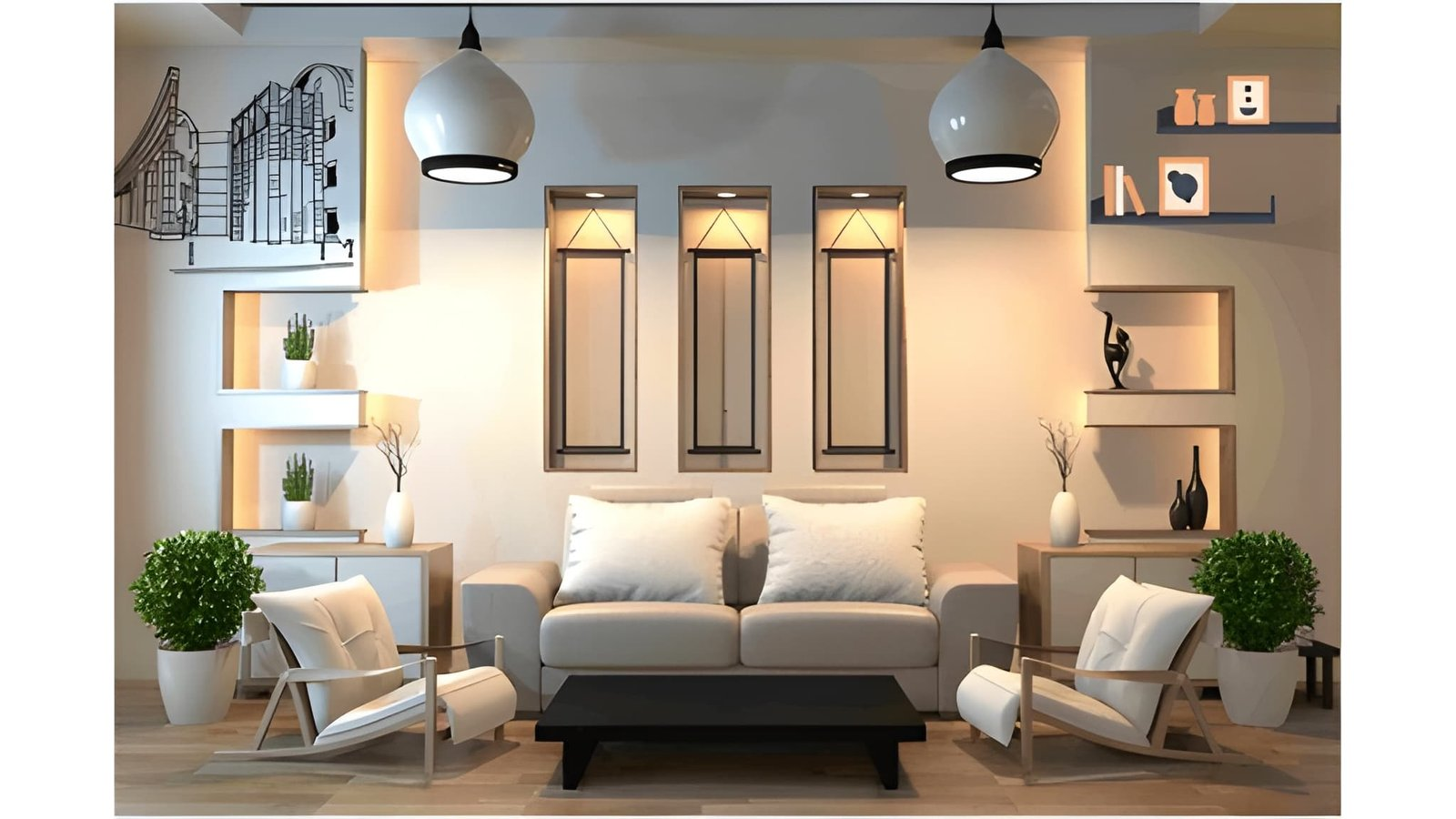
You repaint the walls, swap out the furniture, add a rug — and the room still feels cold. Nine times out of ten, the problem isn’t the decor. It’s the lighting.
Most Canadian homes are lit by whatever the builder installed: a single overhead fixture, a cool-white bulb, and zero thought given to how that light actually feels at 7pm in January when the sun sets before dinner. The result is a room that looks fine in photos but feels sterile in real life.
What type of lighting makes a room feel warm isn’t a complicated question — but the answer involves more than just buying a “warm white” bulb and calling it done. Colour temperature, fixture placement, layering, and even the surfaces in your room all play a role.
This article covers what actually determines warmth in a room’s lighting, which bulb types deliver it consistently, and how Canadian homeowners can build a lighting setup that feels genuinely comfortable — not just technically illuminated.
The Real Reason Your Room Feels Cold
Light has a temperature — and it’s measured in Kelvins (K). This isn’t about heat output. It’s about the colour the light produces.
| Colour Temperature | Kelvin Range | How It Feels | Best Used In |
|---|---|---|---|
| Warm white | 2700K – 3000K | Cosy, amber, candlelight-like | Bedrooms, living rooms, dining rooms |
| Neutral white | 3500K – 4000K | Clean, balanced, slightly clinical | Kitchens, bathrooms, home offices |
| Cool white / Daylight | 5000K – 6500K | Bright, alert, hospital-like | Garages, workshops, task areas |
Most builder-grade fixtures in Canadian homes ship with bulbs in the 4000K–5000K range. That’s why finished, furnished rooms still feel cold — the light itself is working against the warmth you’re trying to create.
The fix starts at 2700K.
What Type of Lighting Makes a Room Feel Warm: The Bulb Breakdown
LED Bulbs at 2700K
This is the current standard recommendation for warm residential lighting — and for good reason. A quality 2700K LED bulb mimics the colour of incandescent light without the energy cost or heat output. For Canadian households where heating costs are already significant, the energy efficiency matters.
Look for bulbs with a CRI (Colour Rendering Index) of 90 or above. CRI measures how accurately a bulb renders the true colours of objects in a room. A low-CRI warm bulb will technically be “warm” but will make everything look slightly off — skin tones, wood finishes, textiles.
Incandescent and Halogen Bulbs
Still available in Canada but being phased out federally. They produce beautiful warm light naturally (around 2700K) but are inefficient. If you have them in fixtures you rarely use — a dining room chandelier, a decorative lamp — they’re fine. Don’t build a whole lighting plan around them.
Edison / Filament LED Bulbs
These sit in a specific category: decorative and warm (often 2200K–2400K, even warmer than standard). They’re excellent for exposed-bulb fixtures, pendants over kitchen islands, and anywhere the bulb itself is meant to be seen. The tradeoff is lower lumen output — they’re atmospheric, not functional.
The Layering Principle: Why One Warm Bulb Isn’t Enough
Swapping to a 2700K bulb in your ceiling fixture is a start. It’s not a solution.
A single overhead light — regardless of colour temperature — creates flat, even illumination that removes shadow and depth from a room. Depth is what makes a space feel dimensional and warm. Without it, you’re just in a well-lit box.
What type of lighting makes a room feel warm at a whole-room level comes down to three layers working together:
| Layer | Function | Examples |
|---|---|---|
| Ambient | General fill light, replaces daylight | Ceiling fixtures, recessed lights, flush mounts |
| Task | Focused light for specific activities | Reading lamps, under-cabinet kitchen lights |
| Accent | Adds depth, highlights texture | Wall sconces, LED strip lights, picture lights |
The goal is to have multiple light sources operating at different heights. Light coming from eye level and below — floor lamps, table lamps, low sconces — reads as inherently warmer and more intimate than light coming from above. This is why restaurants are lit from the sides and bottom, not the ceiling.
For more practical room-by-room lighting guidance built around real home layouts, https://homesblogs.co/
is worth bookmarking.
Room-Specific Warm Lighting Strategies
Living Room
Use a floor lamp in at least one corner. Add a table lamp on each side of the sofa if possible. Keep the overhead fixture on a dimmer — dimmers are one of the most cost-effective upgrades a Canadian homeowner can make, often under $30 at any hardware store.
Bedroom
Eliminate overhead lighting as your primary source entirely. Bedside table lamps at 2700K, or wall-mounted reading sconces, create the kind of light that actually helps wind down before sleep. Bright overhead light in a bedroom is a common reason people feel wired at night.
Kitchen
Kitchens need neutral to cool light at the task level — you need to see what you’re cutting. But the dining or island area within an open-concept kitchen benefits from warmer, lower pendants. Separate the zones: functional cool light above the counters, warm pendants above the table.
Dining Room
Dimmer-controlled chandelier or pendant, hung lower than most people think (30–36 inches above the table surface is the standard). Candles or a sideboard lamp add the accent layer. This is the room where warm lighting does the most work.
Quick Fixes That Work Immediately
| Fix | Cost (CAD Estimate) | Impact |
|---|---|---|
| Replace bulbs with 2700K LED, CRI 90+ | $15–$40 | High |
| Install a dimmer switch | $20–$50 | High |
| Add a floor lamp to a dark corner | $60–$150 | Medium–High |
| Replace cool-white under-cabinet lights | $30–$80 | Medium |
| Add a table lamp to a bare surface | $40–$120 | Medium |
Frequently Asked Questions
Is 2700K or 3000K better for a warm living room?
Both work, but 2700K is noticeably warmer and better suited to living rooms and bedrooms. 3000K is a reasonable middle ground if you want warmth without the amber cast — common in open-concept spaces that include a kitchen.
Does warm lighting actually affect mood?
Yes. Research in environmental psychology consistently links lower colour temperatures and dimmer ambient light to reduced cortisol levels and a greater sense of relaxation. This is especially relevant in Canada where natural light is limited for five to six months of the year.
Can warm lighting make a small room feel larger?
Indirectly. Warm, layered lighting creates depth — and depth reads as space. A well-lit corner feels further away than a shadow-filled one. It won’t replace the effect of mirrors or light paint colours, but it contributes.
What’s the best bulb brand available in Canada?
Philips, GE Cync, and Cree all produce reliable 2700K LED bulbs with CRI 90+ available at Home Depot and Canadian Tire. For smart bulbs, Philips Hue and IKEA’s TRÅDFRI line are the most widely available options.
The Simple Answer
What type of lighting makes a room feel warm comes down to three decisions: colour temperature (2700K), CRI (90 or above), and layering (never rely on a single source). Get those three right and the room changes — not because you redecorated, but because you finally stopped fighting your own lighting.
The bulbs are $15. The dimmer is $30. The difference is immediate.