

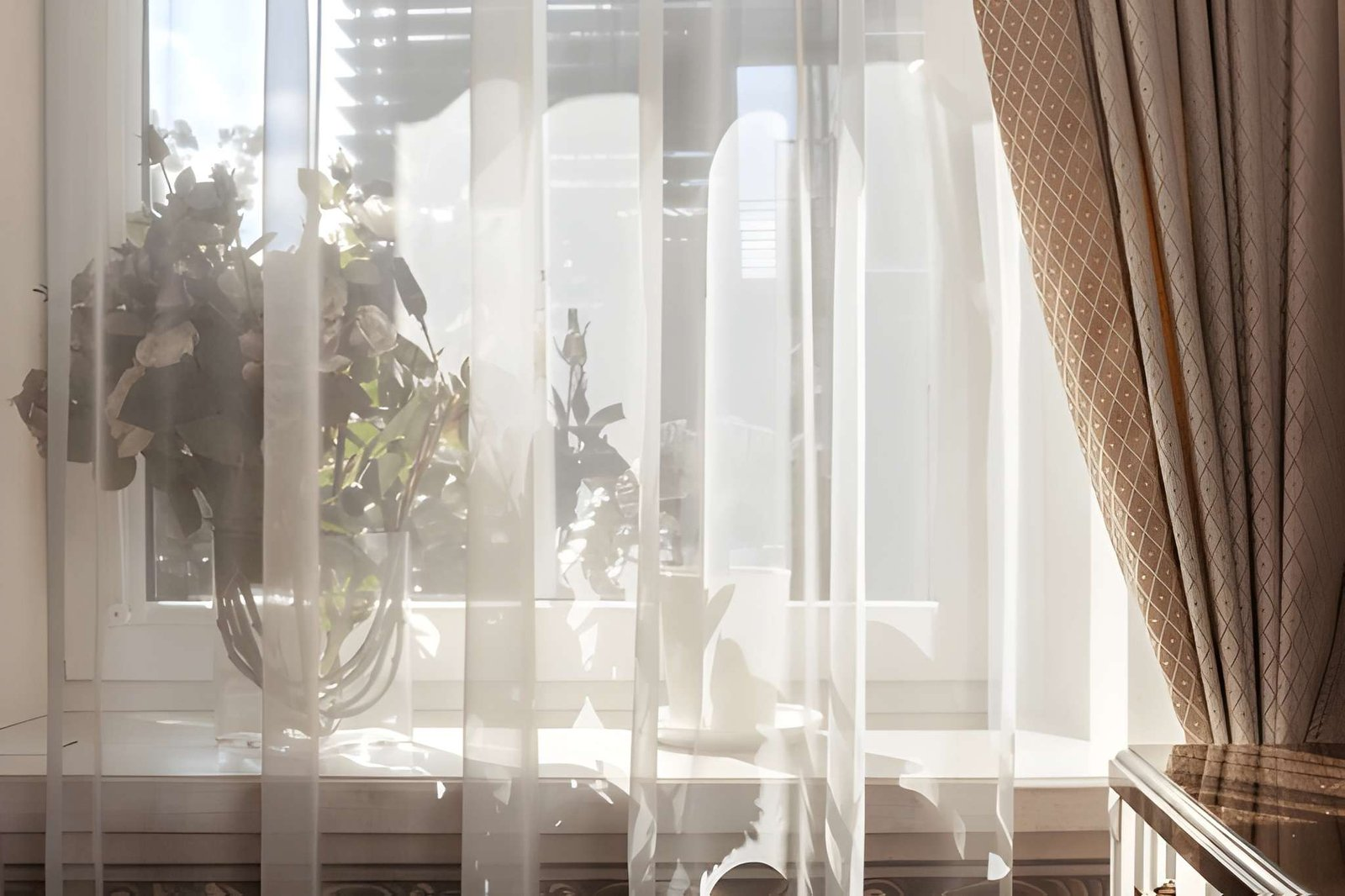
Curtains are one of those things that look simple until you’re standing in a store holding a measuring tape, second-guessing everything.
Most people measure the window, buy curtains that match, hang them at the window frame — and end up with a room that feels somehow smaller and less finished than it did before. The curtains aren’t wrong exactly. But they’re not right either.
Choosing the right curtain length isn’t really about the window. It’s about the wall, the ceiling, and the effect you’re trying to create. A curtain hung two inches above the window frame reads very differently than one hung four inches below the ceiling — even if the window itself is identical. That gap between the rod and the ceiling is doing real visual work.
This guide covers exactly how to choose the right curtain length for any window type found in Canadian homes — from standard bedroom windows to sliding patio doors to awkward basement half-windows. It includes rod placement, fabric drop calculations, the most common sizing mistakes, and a clear reference table you can use before you buy anything.
Why Curtain Length Matters More Than Curtain Width
Most curtain shopping advice focuses on width — how many panels, how full the gather should be. Width matters, but length is what determines whether a room looks finished or accidental.
Short curtains that stop at the windowsill make a room feel squat. Curtains that hover awkwardly above the floor look like they shrank in the wash. Floor-length curtains hung at the window frame instead of near the ceiling compress the visual height of the room.
The right curtain length — combined with correct rod placement — can make an 8-foot ceiling read closer to 9 or 10 feet. In Canadian homes where standard ceiling heights are often exactly 8 feet, that matters.
| Curtain Drop Style | Description | Best Used In |
|---|---|---|
| Sill length | Ends at windowsill | Kitchen, bathroom, small casement windows |
| Below sill (apron) | 10–15cm below sill | Casual spaces, children’s rooms |
| Floor length | 1–2cm above floor | Most living rooms, bedrooms, dining rooms |
| Puddle / break | 5–20cm on floor | Formal living rooms, primary bedrooms |
How to Choose the Right Curtain Length: The Rod Placement Rule
Here’s the part most guides skip: curtain length is determined by where you hang the rod, not by the window measurement.
The standard designer recommendation — supported by every major interior design publication — is to hang the rod 10 to 15cm below the ceiling, not above the window frame. This single change is responsible for most of the visual difference between a room that looks designed and one that looks assembled.
Once you decide rod height, the curtain length follows from the floor up, not from the window down.
The calculation:
- Measure from your chosen rod height to the floor
- Subtract 1–2cm for floor-length panels (enough clearance to hang straight without bunching)
- Add 10–20cm if you want a puddle or break effect
- That number is your required curtain drop — not the window height
| Rod Placement | Visual Effect | Recommended For |
|---|---|---|
| At window frame | Makes ceiling feel low, room feel small | Not recommended for most rooms |
| 15–20cm above window | Modest height gain | Low ceilings where near-ceiling isn’t possible |
| 10–15cm below ceiling | Maximum height illusion, most polished look | Most Canadian rooms with 8–9ft ceilings |
| At ceiling / ceiling mount | Clean, modern, dramatic | High ceilings, floor-to-ceiling windows |
Curtain Length by Window Type
Standard Bedroom or Living Room Window
This is the most common window in Canadian homes — a single or double hung window, typically 90–120cm wide and 100–140cm tall.
The right curtain length here is always floor-length, hung near the ceiling. Sill-length or apron curtains on a standard bedroom window look dated and make the room feel shorter than it is. Buy panels labelled 213cm (84 inches) or 243cm (96 inches) and measure your rod height to match.
Sliding Patio Door
Patio doors present a specific challenge: you need light control and access without the curtains blocking the door when open. Two options work well:
- Panel track blinds in place of traditional curtains — functional and clean
- Two wide panels hung on a rod that extends 30–40cm beyond the door frame on each side, so panels stack completely clear of the glass when open
Length should always be floor-length. Curtains that stop short on a patio door look unfinished and interrupt the vertical line.
Basement Windows
Most Canadian basements have egress or hopper windows — small, high on the wall, often awkward. The honest answer is that curtains often don’t work here. Roman shades or cellular blinds mounted inside the frame are cleaner and more functional.
If you do use curtains, keep them short and inside-mounted. Floor-length curtains on a basement window look nonsensical and actually draw attention to the awkward proportions rather than concealing them.
Bay Windows
Bay windows need individual treatment per pane. Mount a rod on each angled section separately rather than trying to span the whole bay with one rod. Each panel should be floor-length. The rods should match in finish to create visual continuity.
For a broader look at how window treatments interact with room layout and furniture placement in Canadian homes, https://homesblogs.co/
covers this in practical detail.
Standard Curtain Panel Lengths Available in Canada
Most curtain panels sold at Canadian retailers — IKEA, Pottery Barn Canada, HomeSense, Hudson’s Bay — come in these standard drops:
| Panel Length (cm) | Panel Length (inches) | Typical Use |
|---|---|---|
| 137cm | 54″ | Sill length on standard windows |
| 168cm | 66″ | Below-sill / apron length |
| 213cm | 84″ | Floor length on standard 8ft ceilings |
| 243cm | 96″ | Floor length with rod near ceiling, or 9ft ceilings |
| 274cm | 108″ | High ceilings, puddle effect on 9ft |
| 305cm | 120″ | 10ft+ ceilings, dramatic floor-to-ceiling look |
If standard lengths don’t match your measurements exactly, 213cm and 243cm panels are the most commonly hemmed by Canadian dry cleaners and tailors — usually for $15–$30 per panel.
The Most Common Curtain Length Mistakes
Hanging the rod at the window frame. The single most common mistake. It works only in kitchens and bathrooms where sill-length is intentional.
Buying curtains that match the window height. Window height and curtain length are unrelated once you understand rod placement. A 120cm window in a room with a rod hung near the ceiling needs 213cm+ panels.
Choosing sill-length for a living room. Unless the room has radiators under the window or a specific reason panels can’t reach the floor, sill-length in a living room looks like a mistake rather than a choice.
Ignoring the width. Each panel should be 1.5 to 2.5 times the width of the area it covers when gathered. A single skimpy panel per window looks flat and unintentional.
Frequently Asked Questions
What is the standard curtain length for an 8-foot ceiling in Canada?
With the rod hung 10–15cm below the ceiling, you need panels in the 213cm (84 inch) range for floor-length coverage with 1–2cm clearance. If you want a slight break or puddle, go to 243cm.
Should curtains touch the floor or hang above it?
For most rooms, curtains should just graze the floor — 1 to 2cm clearance. This looks intentional without the maintenance issues of a puddle. Hovering 5–10cm above the floor looks like a sizing error.
Can you use 84-inch curtains on 9-foot ceilings?
Only if your rod is hung lower — closer to the window frame. For near-ceiling rod placement on a 9-foot ceiling, you need 96-inch (243cm) panels minimum.
Do curtains have to match room to room?
No, but the rod finish should be consistent throughout an open-concept space. Panel colour and fabric can vary between closed rooms.
The Short Answer
Choosing the right curtain length for any window starts with one decision: where the rod goes. Put it near the ceiling. Then measure floor to rod, subtract a centimetre or two, and buy the closest standard panel length. Everything else — window size, window style, room size — is secondary to that single placement choice.
Get the rod height right and the curtains will look right. It’s that direct.