

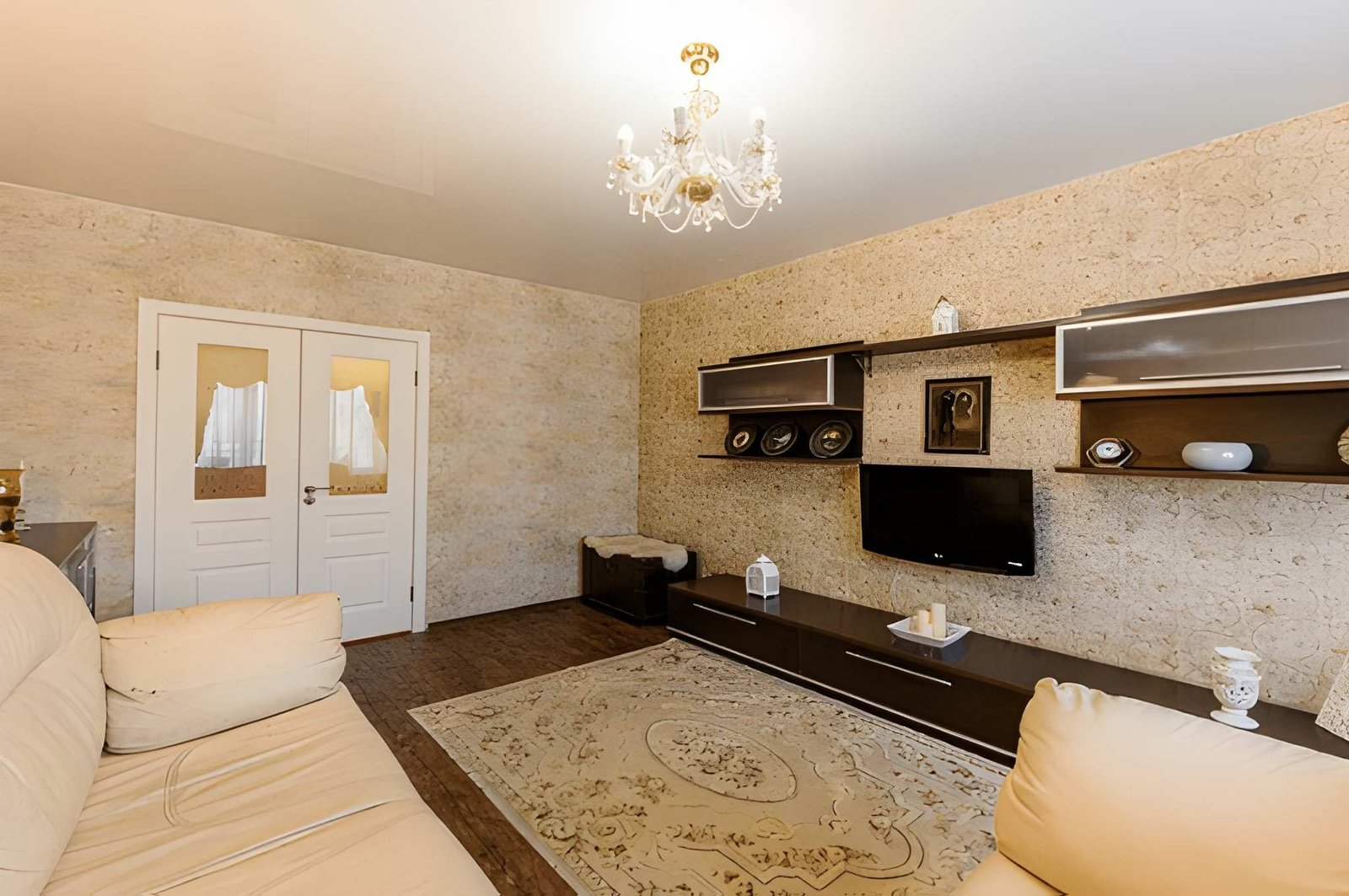
Square footage is fixed. What you do with it isn’t.
If you’ve ever stood in a cramped bedroom or a living room that felt like a shoebox, you already know that furniture alone doesn’t solve the problem. Most people buy smaller pieces thinking that’s the answer — but scale is only one piece of a much larger puzzle.
Making a small room look bigger with decor comes down to how light moves, where the eye travels, and what the brain perceives as depth. These aren’t tricks, exactly. They’re principles that interior designers have used for decades, and they work whether you’re renting a flat, decorating a starter home, or just tired of a space that feels suffocating.
This article covers the specific decor choices — color, mirrors, furniture placement, lighting, and visual layering — that create the illusion of space without touching a single wall. No renovations. No demolition. Just smarter decisions about what you put in the room and where.
Why Small Rooms Feel Small (It’s Usually Not the Size)
Before fixing anything, it helps to understand what actually makes a room feel tight. Most of the time it’s one of three things: too much visual noise, poor light distribution, or furniture that blocks sightlines.
A room with 200 square feet can feel open if those issues are handled. A 400-square-foot room can feel claustrophobic if they’re not.
| Common Mistake | Why It Shrinks the Room | Fix |
|---|---|---|
| Dark accent walls | Absorbs light, closes in the room | Light, cool-toned paint on all four walls |
| Oversized rugs pushed to walls | Eliminates visual breathing room | Float the rug under front furniture legs only |
| Curtains hung at window level | Makes ceilings feel low | Hang rods at ceiling height |
| Too many small decorative items | Creates clutter, breaks sightlines | Fewer, larger statement pieces |
| Furniture against every wall | Oddly makes rooms feel smaller | Pull pieces slightly off the wall |
How to Make a Small Room Look Bigger: The Core Techniques
1. Use Light Colors — But Be Specific About Which Ones
The advice to “paint it white” is half right. Bright white can actually make a small room look smaller if it creates harsh contrast with furniture.
What works better: soft whites, warm creams, pale sage, or dusty blues. These tones reflect light without creating visual tension. Keep the ceiling the same color as the walls or slightly lighter — not darker. A dark ceiling is the fastest way to make a room feel like a box.
2. Make a Small Room Look Bigger with Mirrors
Mirrors are the closest thing interior design has to a cheat code. A well-placed mirror doubles perceived depth by reflecting both light and space.
The placement matters more than the size:
- Hang a large mirror directly across from a window, not adjacent to it
- A floor-to-ceiling mirror on one wall reads as an extension of the room
- Avoid placing mirrors so they reflect clutter — that just doubles the visual noise
| Mirror Placement | Effect on Space |
|---|---|
| Opposite a window | Reflects natural light across the room |
| Adjacent to a window | Minimal depth gain |
| On a narrow hallway wall | Creates length illusion |
| Behind a sofa | Adds depth, makes seating area feel anchored |
| Reflecting clutter | Counterproductive — skip it |
3. Vertical Lines Are Your Friend
The eye reads vertical lines as height. Tall, narrow bookshelves, floor-length curtains hung close to the ceiling, and vertically striped wallpaper all push the eye upward — which makes the ceiling feel higher and the room feel more open.
Horizontal lines do the opposite. Wide, low furniture (the kind heavily featured in mid-century modern aesthetics) works in large rooms but compresses small ones.
4. Choose Furniture That Shows Its Legs
Sofas, chairs, and tables with exposed legs allow light to pass underneath them. That visual gap between furniture and floor keeps the room feeling airy. Heavy, skirted furniture that sits flush with the floor cuts the room visually in half.
The same logic applies to shelving. Open shelving reads as lighter than solid cabinets, even if both occupy the same wall space.
5. Lighting: Layer It, Don’t Center It
A single overhead light in the center of the room is the worst thing you can do for a small space. It casts uniform light that flattens everything and removes the sense of depth.
Layered lighting — a combination of ambient, task, and accent sources — creates shadows and highlights that make a room feel dimensional. Wall sconces, floor lamps in corners, and under-shelf lighting all push light to the edges of the room, which makes it feel wider.
For more ideas on how room-by-room decor decisions affect perception of space, https://homesblogs.co/ covers this in practical, approachable terms.
Quick-Reference: Decor Choices That Expand vs. Compress Space
| Element | Space-Expanding Choice | Space-Compressing Choice |
|---|---|---|
| Color | Soft neutrals, cool whites | Deep, saturated colors on all walls |
| Curtains | Floor-to-ceiling, hung at ceiling | Short panels hung at window frame |
| Furniture | Legs exposed, fewer pieces | Heavy, skirted, wall-to-wall pieces |
| Rugs | Correct size under furniture legs | Too small, centered like an island |
| Lighting | Layered, corner-focused | Single centered overhead |
| Mirrors | Large, opposite light source | Small, decorative, random placement |
| Shelving | Open, vertical | Closed cabinets, horizontal sprawl |
The One Rule That Overrides All the Others
Consistency.
A room that picks one visual language — one palette, one material finish, one style direction — will always feel more open than a room that mixes competing elements, even if the latter is technically larger. Visual coherence reads as calm. Calm reads as spacious.
When you’re trying to make a small room look bigger with decor, the goal isn’t to add more. It’s to add the right things, in the right places, with enough restraint that the room can breathe.
Frequently Asked Questions
Does furniture size really matter in small rooms?
Scale matters, but placement and legibility matter more. A well-placed large sofa can work in a small room. A poorly placed small sofa will still make the room feel cramped.
What’s the best rug size for a small room?
Bigger than most people choose. A rug that only fits under the coffee table makes the seating area feel disconnected and the room smaller. Front legs of all seating pieces on the rug is the standard rule.
Do open floor plans actually make rooms feel bigger?
Yes — removing visual barriers between zones lets the eye travel further, which signals space. In a fixed room, you can mimic this by keeping sightlines clear between zones.